
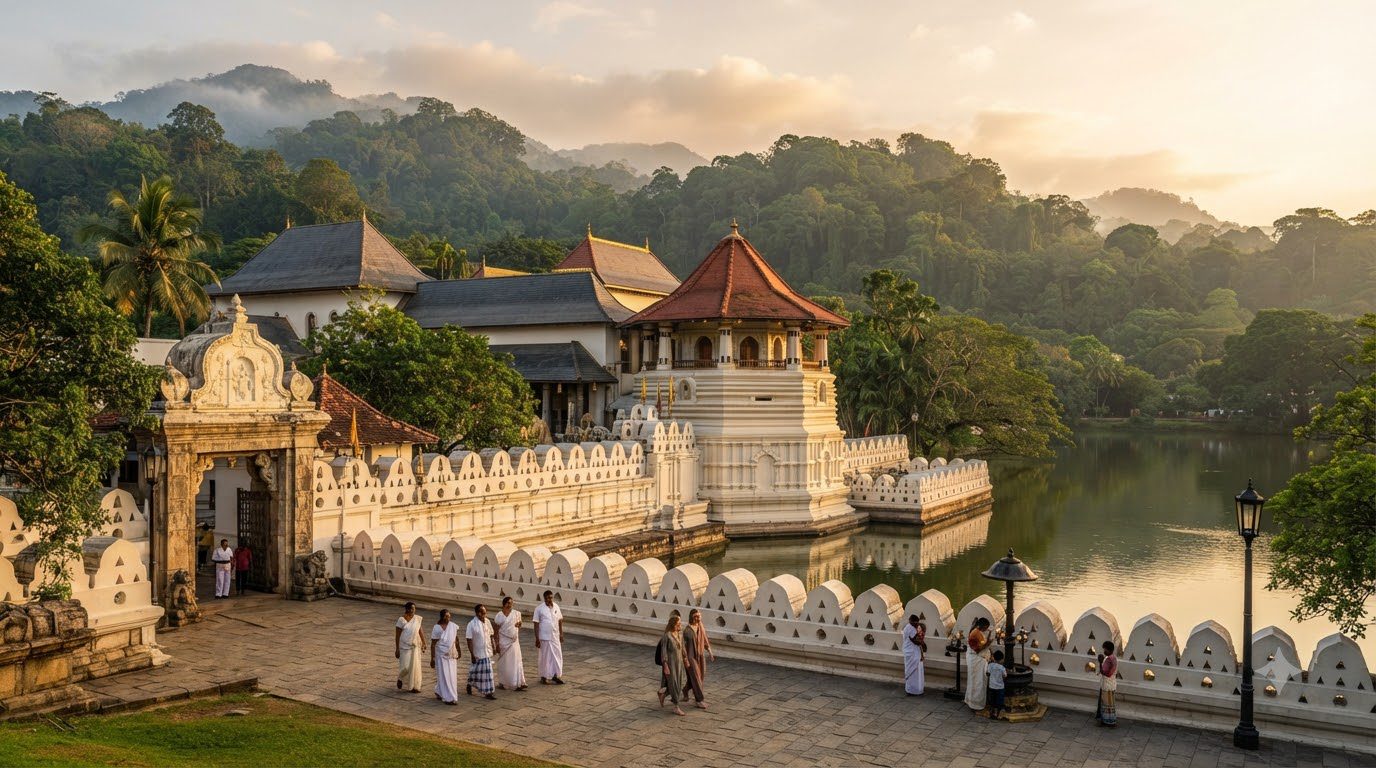
Temple of the Sacred Tooth Relic: Kandy Travel Guide 2026
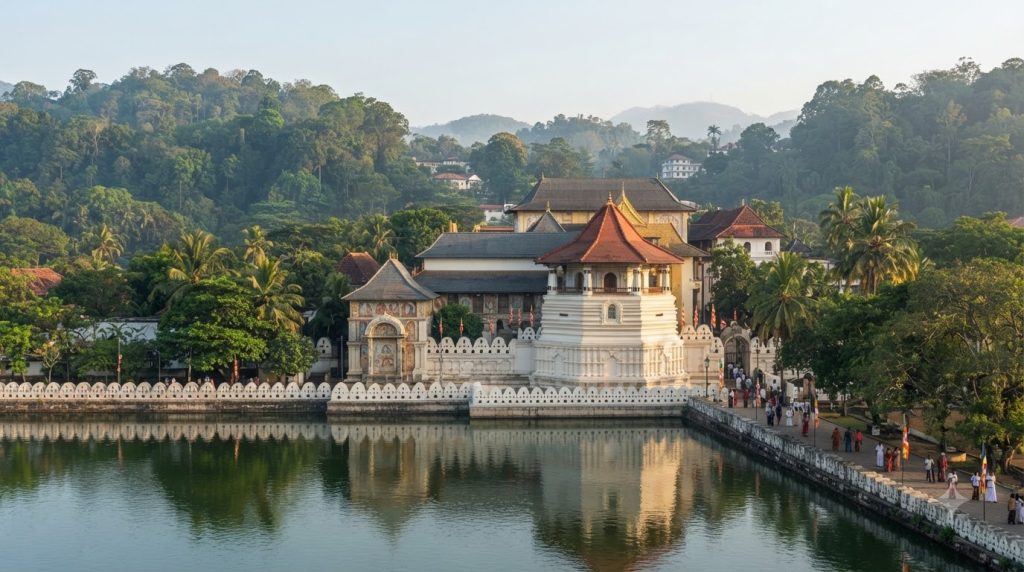
Temple of the Sacred Tooth Relic is one of the most important places to visit in Kandy and one of Sri Lanka’s most significant Buddhist pilgrimage sites. Set beside the beautiful Kandy Lake, the temple is not simply an impressive historic building. It is a living place of worship where daily rituals continue to take place.
For an international traveller, visiting the temple can feel very different from visiting a conventional tourist attraction. You will see people bringing flowers, hear traditional drums during ceremonies and notice that visitors are expected to follow certain customs.
I think that is exactly what makes the experience special. You are not just looking at an ancient monument; you are stepping into a place that still has a very important role in the religious and cultural life of Sri Lanka.
This guide explains what you need to know before visiting, including the history, daily rituals, dress code, opening hours, entrance fees and some practical tips that can make your visit much easier.
Why Visit the Temple of the Sacred Tooth Relic?
The main reason to visit is the temple’s extraordinary cultural and religious importance.
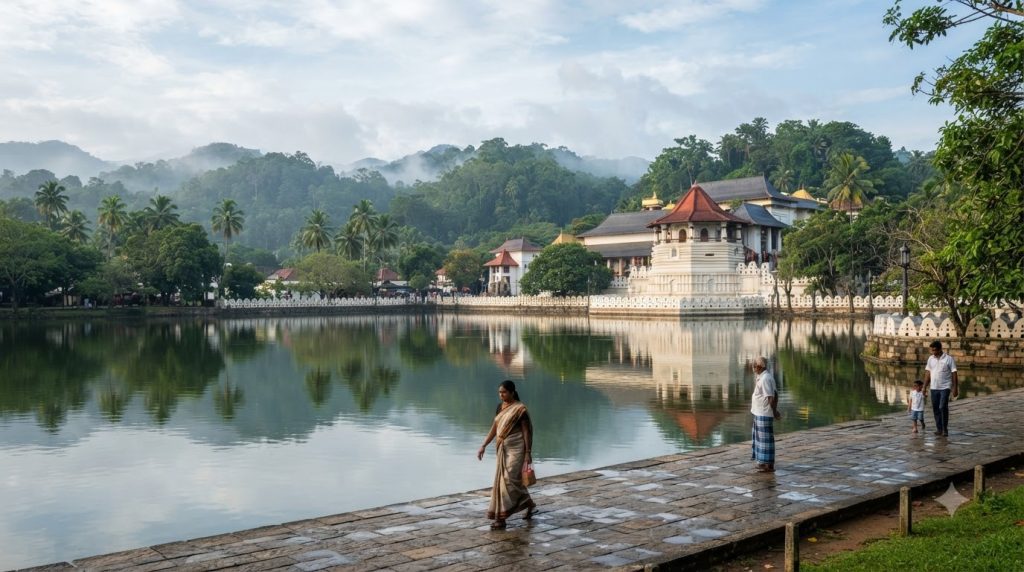
The Sacred Tooth Relic of the Buddha is enshrined here, making the temple an important pilgrimage destination for Buddhists from Sri Lanka and around the world. The Temple of the Tooth is also part of the Sacred City of Kandy, which has been a UNESCO World Heritage Site since 1988. UNESCO describes Kandy as the last capital of the Sinhala kings and identifies the Temple of the Tooth as a famous pilgrimage site.
But you don’t need to be Buddhist to appreciate the place.
The architecture, rituals, traditional music, history and atmosphere make it one of the most interesting cultural experiences you can have in central Sri Lanka.
A Brief History of the Temple
The story behind the Sacred Tooth Relic is deeply connected with the history of Sri Lanka.
According to Buddhist tradition, the tooth relic was brought to Sri Lanka from India in the 4th century. Over the centuries, the relic became closely associated with the authority of Sri Lankan kings. Wherever the capital moved, the sacred relic was traditionally taken with the rulers.
Kandy eventually became the final royal capital of the Sinhala kings. The temple complex became part of the royal palace environment, reflecting the close relationship between the Buddhist religion and the monarchy.
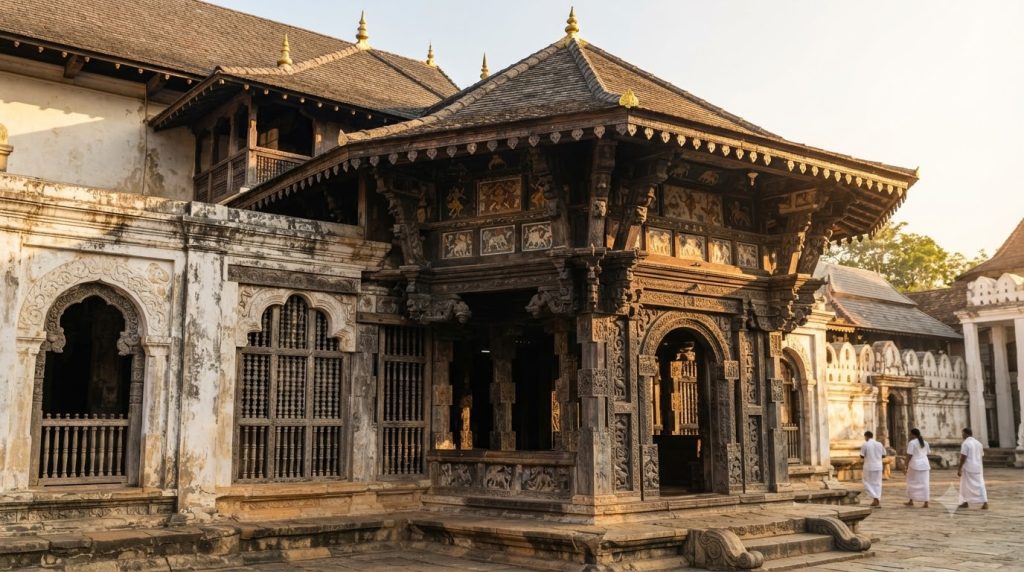
UNESCO recognises this connection between the royal city, the palace complex and the Temple of the Tooth as part of the outstanding cultural importance of the Sacred City of Kandy.
Today, the royal era has long passed, but the religious importance of the relic remains.
Where Is the Temple of the Sacred Tooth Relic?
The temple is in the heart of Kandy, in Sri Lanka’s Central Province.
It sits beside Kandy Lake, making it easy to combine with several other attractions in the city. You can walk to the temple from many central hotels, or use a tuk-tuk or taxi if you are staying further away.
The surrounding area is particularly enjoyable on foot. Once you have finished visiting the temple, you can explore the streets around Kandy Lake, visit nearby cultural attractions or simply take some time to enjoy the atmosphere of the old royal city.
Temple of the Sacred Tooth Relic Opening Hours
According to the official Sri Dalada Maligawa website, the temple is open every day from 5:30 am to 8:00 pm.
The temple’s daily services, known as Theva, take place during three main periods:
- Morning Service: 5:30 am – 7:00 am
- Midday Service: 9:30 am – 11:00 am
- Evening Service: 6:30 pm – 8:00 pm
If you want to experience the temple when its religious rituals are taking place, these periods are particularly interesting.
However, they can also be busy. If you prefer a quieter visit, consider visiting outside the busiest ceremony periods.
Always check the official temple website before travelling, particularly during major religious events or special ceremonies.
Entrance Fees for Foreign Visitors
The official temple FAQ currently lists the following entrance fees for foreign visitors:
- SAARC countries: LKR 2,500
- Thailand and Myanmar: LKR 2,500
- Other countries: LKR 3,000
The ticket includes access to the Temple of the Tooth Relic as well as the Dalada Museum, World Buddhist Museum, Tusker Museum and Royal Elephant Stable.
The official website also states that tickets are issued through machines at Sri Dalada Maligawa and that tickets or fees issued by other individuals or institutions are not valid.
Because entrance fees can change, check the official source shortly before your visit.
What Should You Wear?
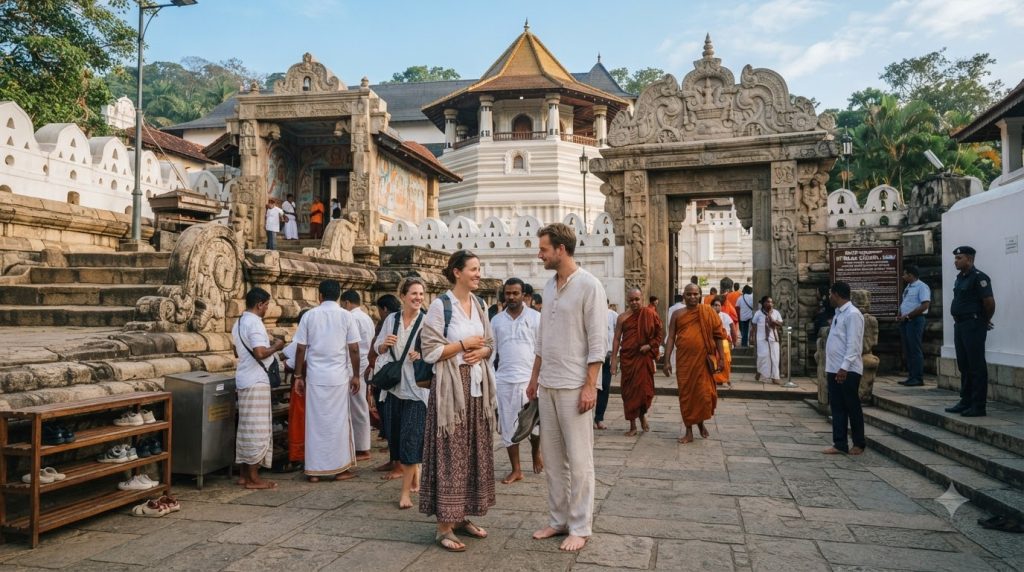
This is one of the most important things to know before visiting.
The Temple of the Sacred Tooth Relic is an active religious site, so visitors are expected to dress respectfully.
According to the temple’s official visitor guidelines, shorts, sleeveless clothing and body-revealing clothing are not permitted. Appropriate clothing can be obtained at the entrances if necessary.
I recommend wearing:
- Long trousers or a long skirt
- A shirt or top covering the shoulders
- Comfortable clothing suitable for walking
- Shoes that are easy to remove
It is better to arrive dressed appropriately rather than having to find suitable clothing at the entrance.
What Happens When You Enter?
Security screening is part of the experience.
The official temple guidelines state that everyone entering the Temple of the Sacred Tooth Relic is screened at the entrance, and belongings and offerings may be checked using scanning equipment.
You may also need to hand over footwear, bulky luggage and non-essential items at the designated reception booths before entering the temple premises. The temple has separate booths for local devotees and foreign tourists.
This means it is best to travel light when visiting.
Avoid bringing unnecessary bags or items, and allow some extra time for the entrance process.
Experience the Daily Theva Ceremony
If you want to understand the spiritual side of the temple, try to visit during one of the daily Theva services.
The official temple describes these as daily rituals performed for the Sacred Tooth Relic. They include traditional sound offerings and carefully organised religious ceremonies.
The morning service begins with traditional Hewisi drumming. Offerings of flowers and food form part of the ceremonies, and the opening and closing of the inner areas follow established rituals.
The evening service has its own atmosphere, with offerings of drinks and other traditional items.
For a first-time visitor, the important thing is to remember that this is a genuine religious ceremony rather than a performance created for tourists.
Watch quietly, follow the instructions of temple staff and worshippers, and give people space to practise their faith.
Can You Photograph Inside?
Be particularly careful with photography.
The official temple information states that photography and videography are permitted outside the Temple of the Sacred Tooth Relic premises but are strictly prohibited inside the temple premises.
For that reason, don’t assume that because you see other people taking photographs, you can do the same.
Follow the signs and instructions from staff. When in doubt, put your camera or phone away.
There are still plenty of opportunities to photograph the exterior architecture, Kandy Lake and the surrounding area.
The Architecture and Atmosphere
One of the things I enjoy about visiting the temple is the contrast between its detailed architecture and the peaceful behaviour of the people inside.
The complex contains beautifully decorated wooden and painted elements, traditional roofs, stone structures and carefully maintained religious spaces.
Rather than rushing through it, take your time.
Look at the details around you. Notice the flowers brought by devotees, listen to the sounds of traditional drums and observe the way people approach the sacred spaces.
These small details often make the visit more memorable than simply taking a few photographs.
Kandy Lake and the Area Around the Temple
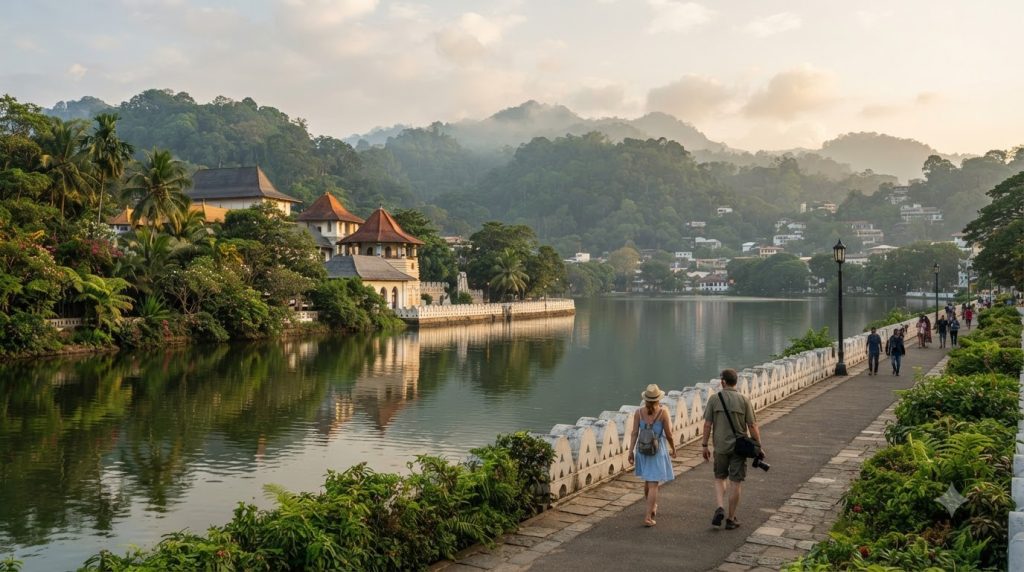
After visiting the temple, don’t immediately leave Kandy.
Kandy Lake sits directly beside the temple and is one of the easiest places to enjoy a relaxed walk.
The lake, surrounding hills and historic buildings create one of the most recognisable landscapes in central Sri Lanka.
A good idea is to visit the temple first and then take a slow walk around part of the lake. The combination gives you a better sense of why Kandy became such an important royal and religious centre.
The wider Sacred City of Kandy is also part of UNESCO’s World Heritage listing.
Best Time to Visit
Kandy has a tropical highland climate, so weather can change quickly.
For sightseeing, early morning or late afternoon can be comfortable and attractive for photography.
If your main interest is experiencing the religious atmosphere, plan around one of the daily Theva periods.
If you want to experience the famous Kandy Esala Perahera, you will need to plan your trip around the annual festival period. The procession is closely associated with the Sacred Tooth Relic and is one of the most important cultural events in Kandy. UNESCO notes the annual pageant in homage to the Tooth Relic as part of the site’s intangible cultural significance.
However, festival periods can be extremely busy, so accommodation should be arranged well in advance.
How to Get to the Temple
The temple is centrally located, so reaching it is relatively straightforward.
From Kandy Railway Station
The railway station is within the central part of the city. You can take a tuk-tuk or taxi, or walk if you are comfortable with the distance and weather.
By Tuk-Tuk
Tuk-tuks are one of the easiest ways to move around Kandy. Agree on the fare beforehand if the driver is not using a meter.
By Taxi
Ride-hailing and taxi services can be useful if you are travelling with luggage or as a family.
By Train from Colombo
Travelling from Colombo to Kandy by train is one of Sri Lanka’s classic journeys. The route passes through changing landscapes as you travel inland towards the hills.
Practical Tips for First-Time Visitors
A few simple preparations can make your visit much easier.
Arrive with appropriate clothing. This is probably the most important tip.
Travel light. Security checks and baggage handling are easier when you have fewer belongings.
Carry some water. Kandy can become warm during the day, particularly when walking around the city.
Allow enough time. Don’t schedule the temple between two activities with only 30 minutes available.
Respect worshippers. Remember that people are visiting for religious reasons, not simply sightseeing.
Don’t photograph where it is prohibited. This is particularly important inside the temple.
Check official information before visiting. Opening times, fees and special arrangements can change.
Suggested Half-Day Kandy Itinerary
If you only have half a day in Kandy, you can still enjoy the temple and its surroundings.
Morning
Start with the Temple of the Sacred Tooth Relic during the morning service.
After exploring the temple complex, walk towards Kandy Lake.
Late Morning
Take a relaxed walk around the lake and explore the surrounding streets.
Stop for a Sri Lankan breakfast or lunch at a local restaurant.
Afternoon
Visit another Kandy attraction such as the Royal Botanic Gardens or explore the city’s shops and markets.
If your schedule allows, return towards the temple area in the evening to experience the atmosphere during the evening service.
Frequently Asked Questions
Is the Temple of the Sacred Tooth Relic worth visiting?
Yes. It is one of Sri Lanka’s most important Buddhist pilgrimage sites and offers a combination of history, architecture, culture and living religious traditions.
How long should I spend at the Temple of the Tooth?
Allow at least 1–2 hours if you want to explore without rushing. More time may be useful during busy religious ceremonies.
Can non-Buddhists visit the temple?
Yes. International visitors of different faiths can visit, provided they follow the temple’s rules and behave respectfully.
Can I take photographs inside the temple?
No. The official temple information states that photography and videography are prohibited inside the Temple of the Sacred Tooth Relic premises.
What should I wear to the Temple of the Tooth?
Wear respectful clothing covering your shoulders and knees. Shorts, sleeveless and body-revealing clothing are not permitted according to the official guidelines.
What time is the Temple of the Tooth open?
The official website currently states that the temple is open daily from 5:30 am to 8:00 pm.
When are the daily ceremonies?
The three main Theva periods are 5:30–7:00 am, 9:30–11:00 am and 6:30–8:00 pm.
How much is the entrance fee?
The current official fee is LKR 2,500 for visitors from SAARC countries, Thailand and Myanmar, and LKR 3,000 for visitors from other countries.
Final Thoughts
The Temple of the Sacred Tooth Relic is one of those places that is difficult to understand fully from photographs alone.
Its importance comes not only from its architecture or long history, but from the fact that it remains a living centre of Buddhist worship.
For me, the most memorable part is the atmosphere: flowers being offered, traditional drums sounding during the ceremonies and visitors quietly moving through the temple with respect.
If you are travelling through central Sri Lanka, I would definitely make time for Kandy and the Temple of the Sacred Tooth Relic. Just remember that you are visiting a sacred place first and a tourist attraction second.
Dress respectfully, take your time and allow yourself to experience the atmosphere rather than simply ticking another attraction off your list.
For current visitor information, fees, opening hours and temple guidelines, check the official Sri Dalada Maligawa website before your visit.
Suggested internal links for SriLankaEpic.com
- Jaffna Travel Guide
- Riverston Sri Lanka Travel Guide
- The Ultimate Guide to Galle Fort, Sri Lanka
- Bambarakanda Falls
- Mirissa, Sri Lanka
- Sinharaja Forest Reserve
Suggested external authority link
For heritage information, link naturally to the UNESCO Sacred City of Kandy page, which documents Kandy’s World Heritage status and the significance of the Temple of the Tooth.
Wow! This is the most detailed guide to Temple of the Tooth in Sri Lanka I’ve seen.
I loved how you explained the history and dress code respectfully.
Thank you for helping tourists visit with the right knowledge 🙏
“Thank you for the kind words! Providing respectful and accurate travel guidance for sacred places like the Temple of the Tooth is always my priority. Wish you a wonderful visit to Kandy!”